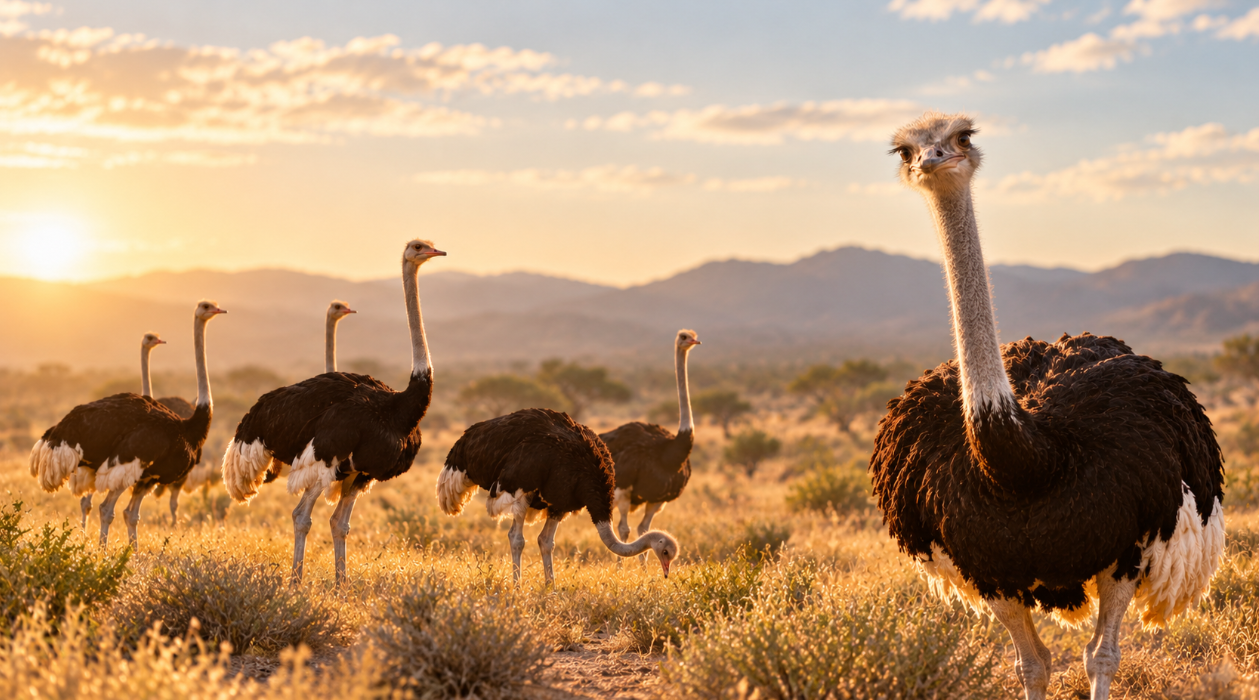
Flock of ostriches at golden hour in the desert

Ostrich Community & Resources

Learn Everything About the World's Most Remarkable Bird

From farming insights and nutritional science to ostrich behavior and sustainable agriculture — this is your resource hub for all things ostrich.

By the Numbers

Ostrich Fast Facts

9 ft

Tallest bird on Earth

Adult ostriches stand up to 9 feet tall and weigh up to 320 lbs — the largest living bird species.

45 mph

Top running speed

Ostriches are the fastest running birds on Earth, capable of sustained speeds of 30–35 mph and bursts up to 45 mph.

3 lbs

Average egg weight

An ostrich egg weighs approximately 3 lbs and is equivalent to roughly 24 chicken eggs in volume — the world's largest egg.

100% Non-Mammalian

Unique protein source

Ostrich is the only red meat that comes from a non-mammalian source — a meaningful distinction for those with mammalian protein sensitivities. It's also classified as red meat but carries the fat content of chicken, making it one of the healthiest proteins available.

97%

Fat-free meat

Ostrich meat is classified as red meat but has the fat content of chicken — making it one of the healthiest proteins available.

8+

Premium by-products

Leather, feathers, oil, eggs, eggshells, pet treats, and pharmaceutical compounds — the ostrich yields more premium products per animal than almost any other species.

Educational Resources

Farming Insights & Resources

Everything we know about ostriches — from the science of their nutrition to the art of raising them in the California desert.

Nutrition

The Nutritional Profile of Ostrich Meat

Ostrich meat is rich in iron, high in protein, and has a fat content comparable to chicken — making it one of the most nutritionally complete red meats available. Learn how it compares to beef, bison, and other proteins.

Sustainability

Why Ostrich Farming is the Future of Sustainable Agriculture

Ostriches require significantly less water and land per pound of protein than cattle, produce less methane, and can be raised on marginal land unsuitable for conventional agriculture. We explore the full environmental case.

Farming

Zero-Waste Ostrich Farming: How We Use Every Part of the Bird

From premium steaks to luxury leather, skincare oil, artisan feathers, and pharmaceutical compounds — every part of the ostrich has value. We walk through our zero-waste philosophy and how it shapes every decision on the farm.

Health

Ostrich Oil: The Science Behind the Skin Benefit Claims

Ostrich oil has been used therapeutically for centuries, but what does the science actually say? We review the research on ostrich oil's fatty acid composition, potential anti-inflammatory properties, and skin applications.

Culinary

How to Cook Ostrich: A Guide for Home Cooks and Chefs

Ostrich meat is lean, flavorful, and versatile — but it cooks differently than beef. Learn the key techniques for preparing ostrich steaks, ground meat, and sausages to perfection.

Farming

Raising Ostriches in California: Climate, Land, and Husbandry

California's high desert is an ideal environment for ostrich farming — warm, dry, and spacious. We share what we've learned about raising ostriches in this unique climate and what makes our approach different.

Product Care

Care & Handling Guides

Practical guidance for getting the most from every Wishbones product.

🥩

Cooking Ostrich Meat

  1. 1Thaw overnight in the refrigerator — never at room temperature.
  2. 2Bring to room temperature 30 minutes before cooking.
  3. 3Cook steaks to 160°F internal temperature — ostrich is lean and overcooks quickly.
  4. 4Rest 5 minutes before slicing. Serve medium for best flavor and texture.
🧴

Using Ostrich Oil

  1. 1Apply a small amount to clean, dry skin — a little goes a long way.
  2. 2Massage gently in circular motions until absorbed.
  3. 3Use morning and evening for best results.
  4. 4Store in a cool, dark place away from direct sunlight.
🪶

Caring for Ostrich Feathers

  1. 1Dust gently with a soft brush or shake lightly to restore fluff.
  2. 2Avoid moisture — if feathers get wet, allow to air dry naturally.
  3. 3Store upright in a dry, well-ventilated space.
  4. 4Keep away from direct sunlight to preserve color.
👜

Maintaining Ostrich Leather

  1. 1Clean with a soft, slightly damp cloth — never saturate.
  2. 2Apply a quality leather conditioner every 3–6 months.
  3. 3Store in a dust bag away from direct light and heat.
  4. 4Avoid prolonged contact with water or harsh chemicals.

Got Questions?

Frequently Asked Questions

Still have questions?

Contact us directly →

Stay Connected

Join our community for farming updates, product launches, recipes, and the latest from Wishbones Ostrich Farm.

No spam. Unsubscribe anytime.